
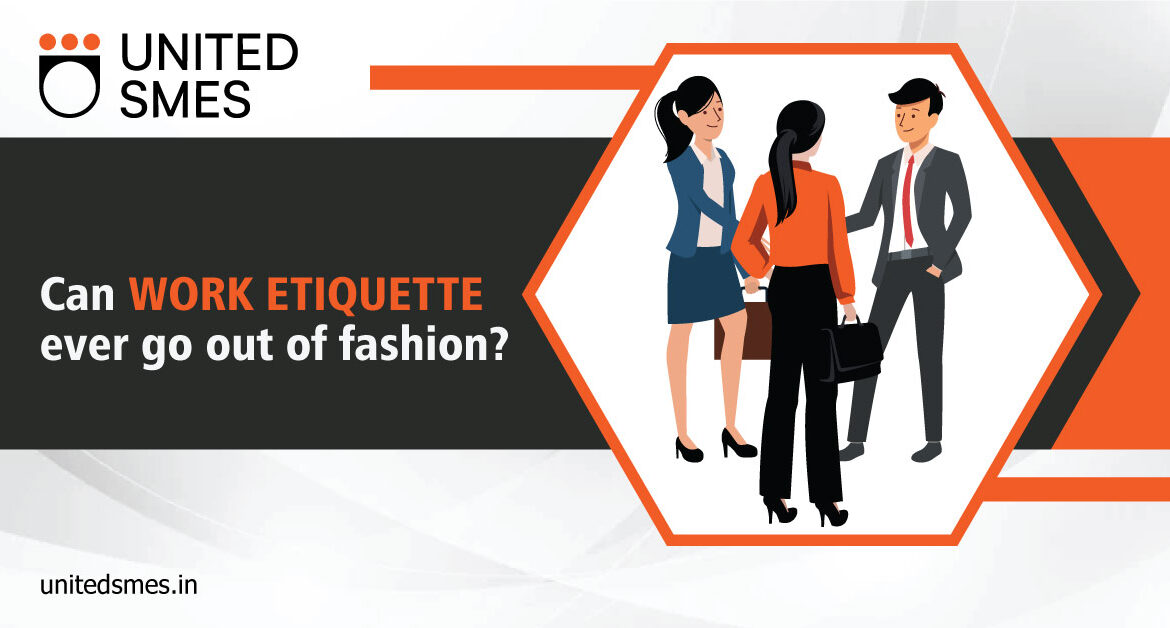
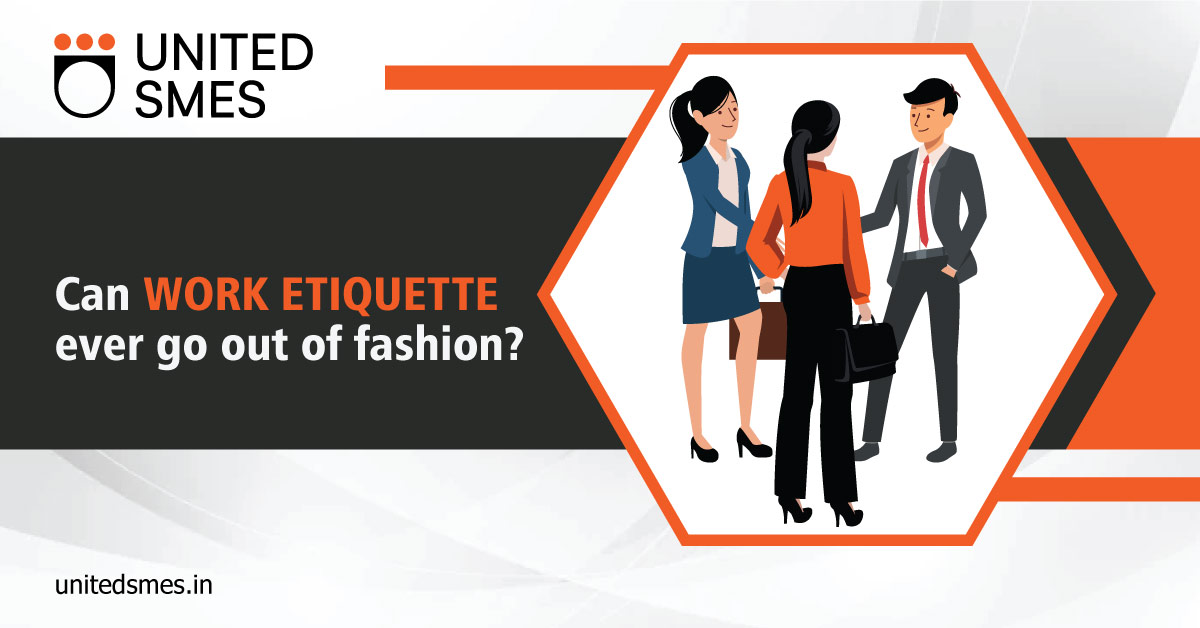
Can work etiquette ever go out of fashion?
The covid pandemic has made its rendezvous attack causing every employee to work from home. Many lifestyles, hobbies, and daily habits changed due to this work-from-home effect. While working in an office, there was a sequence of regular routines to do, from waking up, rolling the bed, freshening up, having breakfast, and going to the office. Everything was so organized because of the work etiquette we had to maintain.
Those are not the only work etiquette but include punctuality, communication, dressing styles, and making impressions all are the sets in work etiquette.
But can work etiquette ever go out of fashion?
It doesn’t go out of fashion. But we may need to rebuild it.
Is work etiquette been neglected due to the pandemic?
As we have said, the pandemic has made everyone work from home. The lifestyle has completely taken a turnover. Now it’s waking up half an hour early before work starts, sneaking out during meetings, lack of punctuality during the meetings and discussions, and restructuring of habits that have caused the work etiquette to be ignored.
But still, in some places, the work etiquette is still followed to preserve integrity and conventionality.
How can work etiquette will be upheld?
Even though we are in different circumstances, we can try and uphold work etiquette. Even founders and CEOs who are self-employed have work etiquette that would have to maintain.
But how?
- Punctuality
The main aspect or character of an employee who is also self-employed is showing punctuality. Presenting yourself at the right time for work is a practicable skill. We forget this because we are in the comfort of our homes and try to show up at the time we can. Especially for those who are self-employed, it is really important to be punctual for your work because there is no higher authority to manage your work.
- Communication
Your communication should be warm, crisp, and clear. And respond to phone calls and emails within 24 hours. Never bully, harass or insult someone while you are communicating. This is the most important thing. Emails should be grammatically correct and should sound on a positive note.
- Dressing style
No matter you are working from home or running a business, your dressing style, and how you present yourself is a critical things. Research shows how the outfit you wear and the type of shoes reflect your personality, character, attributes, and many other features.
Try to incorporate a work-fashion approach where you put on a formal dress and work. This optimizes the seriousness of your work and also enhances performance by giving an office environment.
- Network with people
This might sound silly as work etiquette, but it’s really the most important thing. You can’t just work alone without talking to people. Even if you are an introvert, it’s really crucial to build connections and relationships. They hold major opportunities ahead and also help us both personally and professionally. You can have joint fun and entertainment as well.